DropStock – Full-Stack Inventory Management Platform
An intuitive full-stack web application built with Angular 18, Angular Material UI, and .NET 8 (50+ API endpoints) to track stock levels, manage products, orders, and streamline business operations.
Project Overview
An intuitive full-stack web application built with Angular 18, Angular Material UI, and .NET 8 (50+ API endpoints) to track stock levels, manage products, orders, and streamline business operations.
Problem Statement
MunchRun's app had a 54% cart abandonment rate and a declining 3.1-star App Store rating. Users were dropping off primarily during the customization and checkout flow due to confusing UI patterns and a lack of real-time feedback.
- 62% of drop-offs occurred during the item customization step
- Users spent an average of 6.8 minutes placing a single order
- 45% of support tickets were related to order tracking confusion
- Repeat order rate had declined from 61% to 44% over 8 months
- New user retention at day-7 was at a low 22%
Research & Discovery
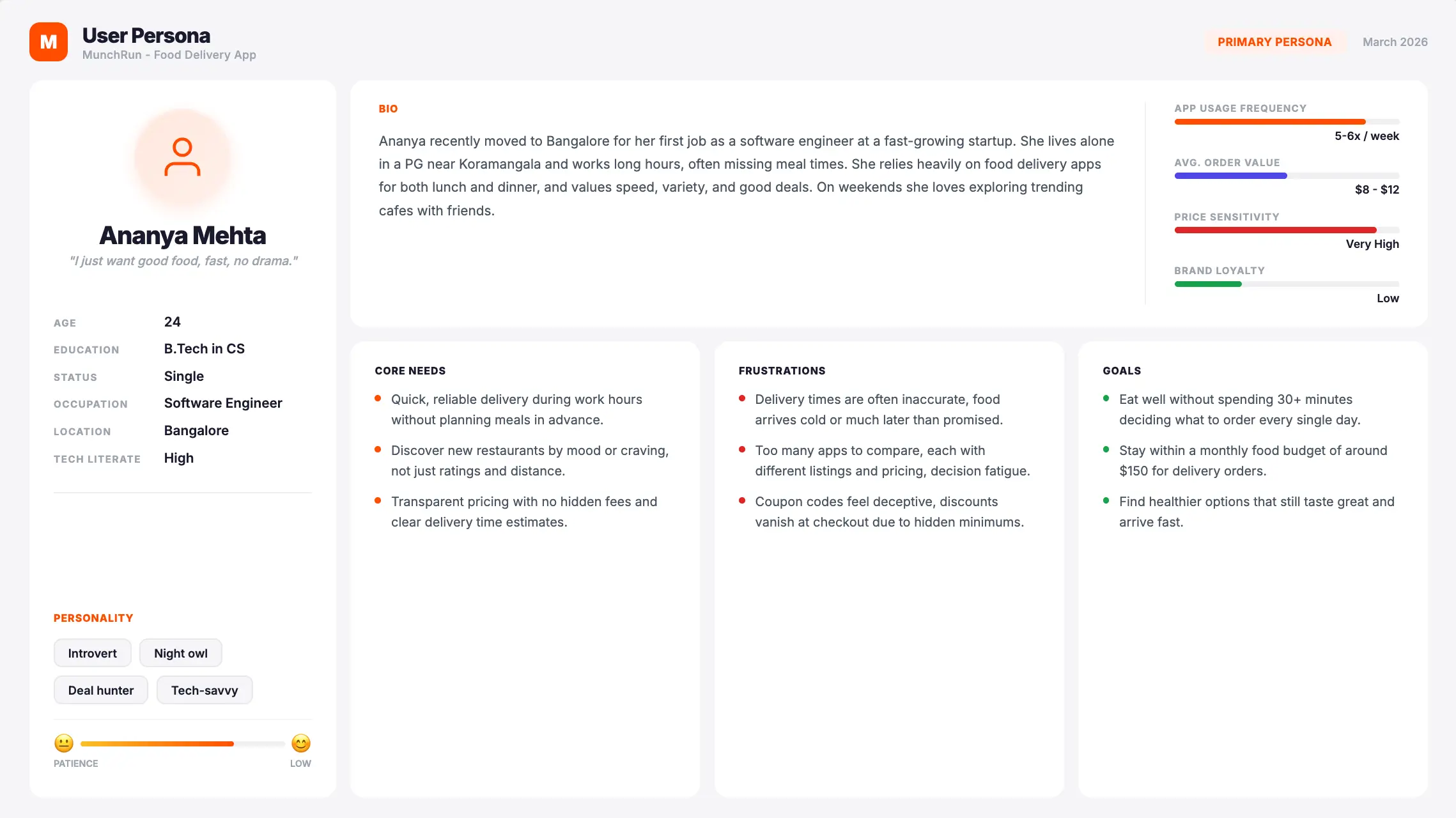
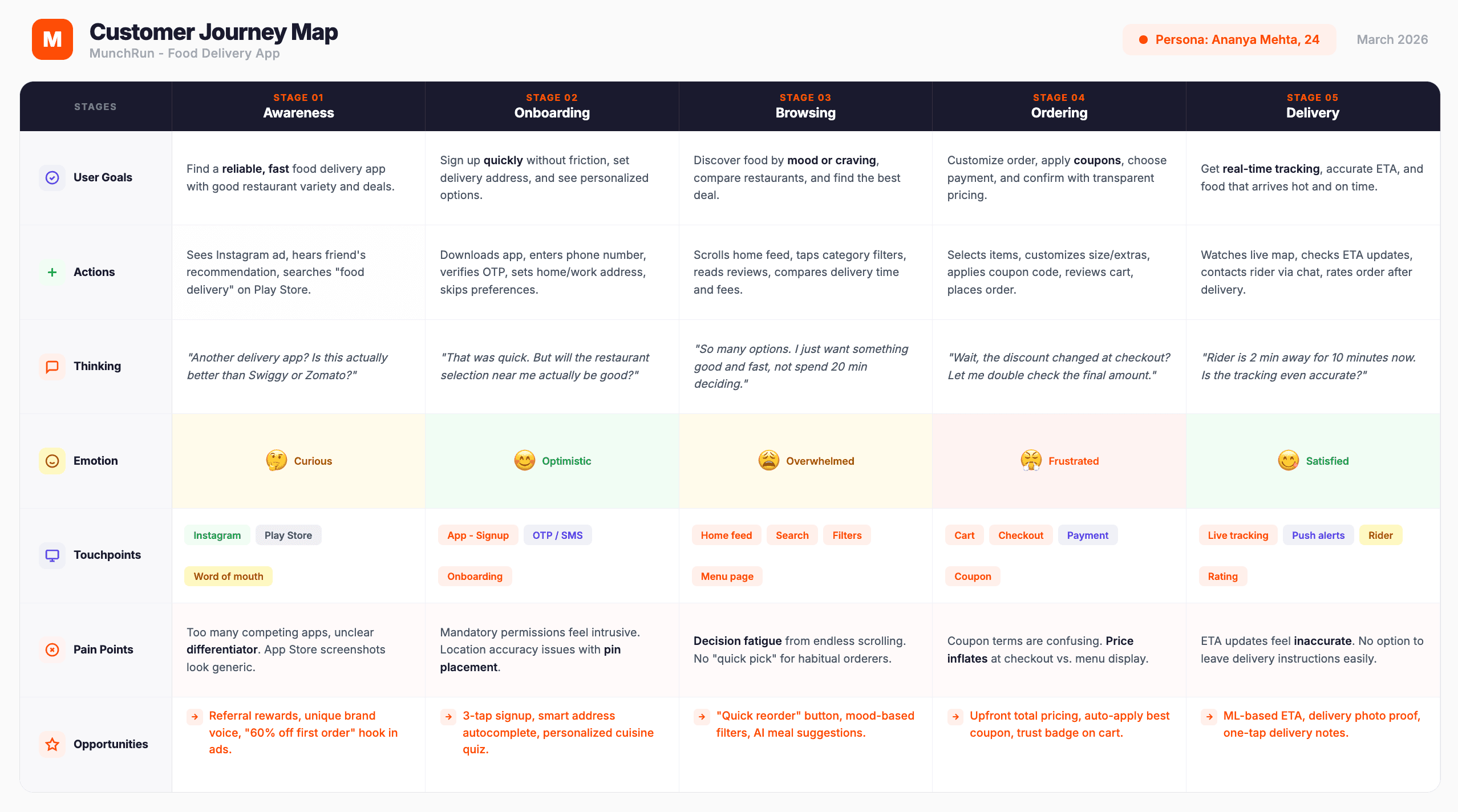
I ran a 3-week discovery phase combining in-app analytics, user interviews, and a competitive audit of 6 major delivery platforms.
18
User Interviews
3200
Session Recordings Analyzed
6
Competitor Audits
Key Findings
- 74% of users found the customization screen overwhelming and unclear
- Users expected real-time delivery tracking but received only static ETAs
- Repeat customers wanted a faster reorder path but couldn't find one
- The restaurant discovery page lacked meaningful filtering, frustrating new users
Ideation
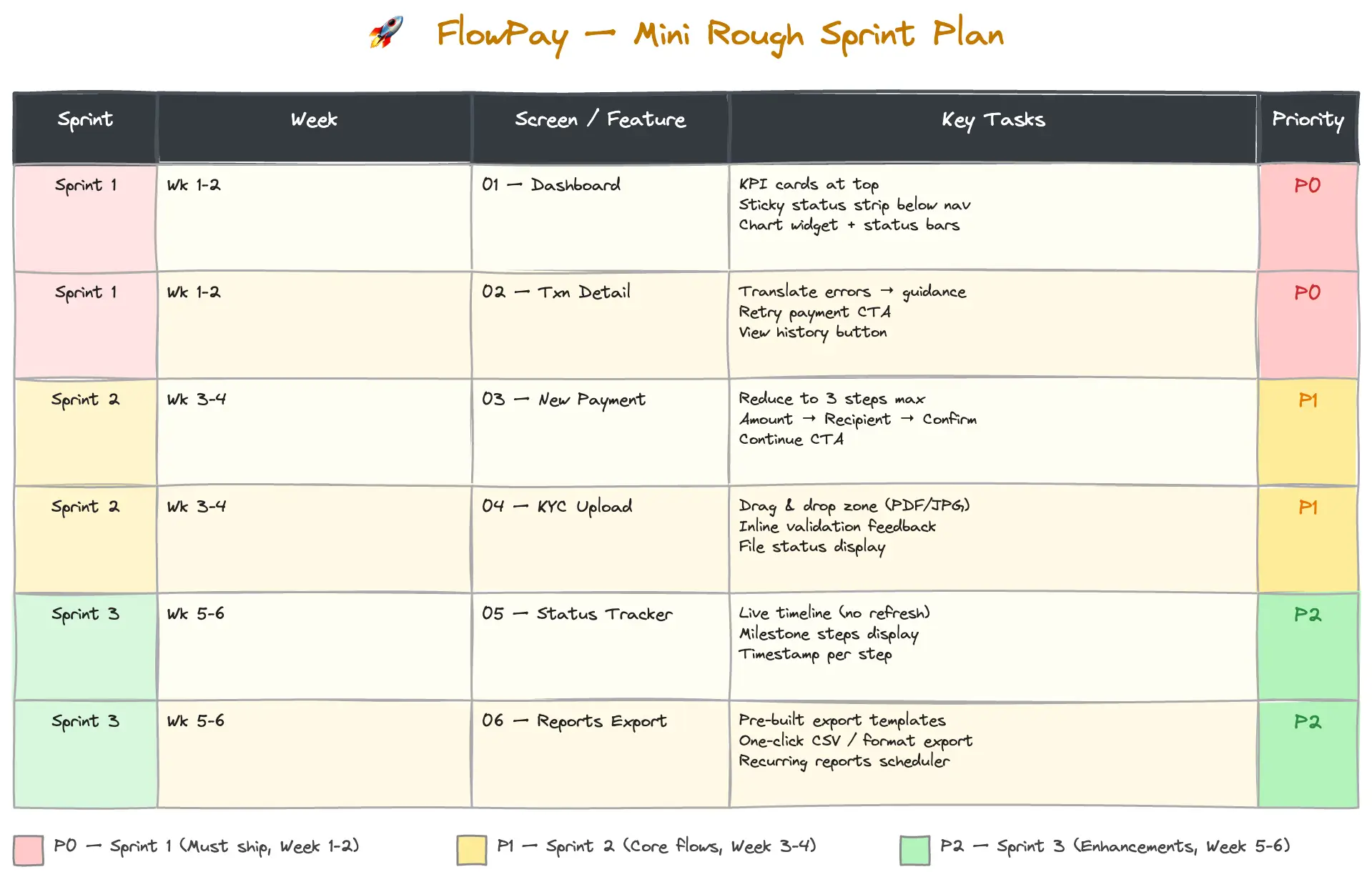
I ran a 2-day design sprint with the product and engineering team. Using how-might-we questions, affinity mapping, and storyboarding, we generated 90+ concepts and narrowed them down to 2 strong directions.
We chose "QuickFlow" - a concept built around reducing decision fatigue by surfacing smart defaults, saved preferences, and a one-tap reorder system at every touchpoint.
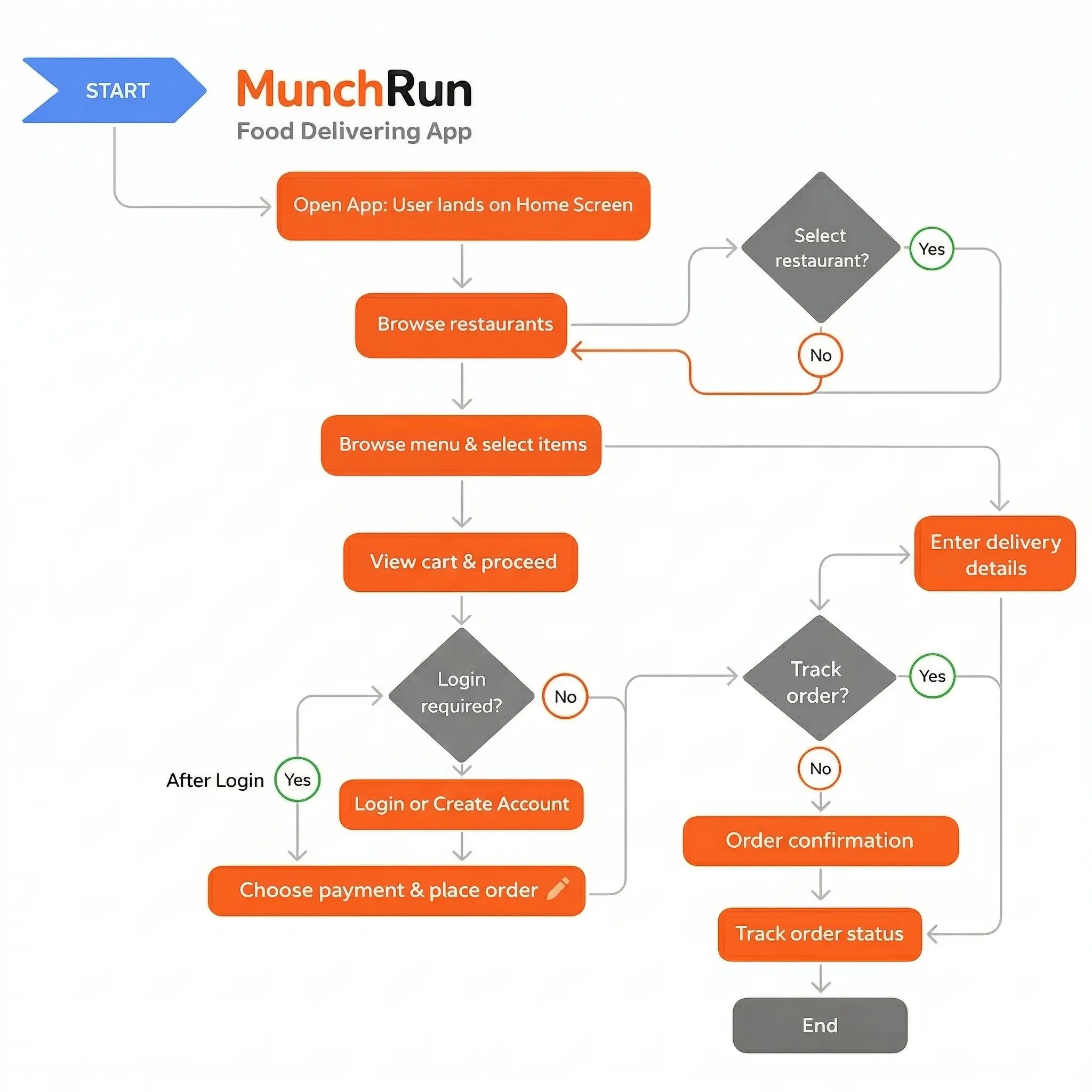
User Flow
I mapped three primary journeys: new user discovery, repeat order, and live order tracking. The main goal was cutting the average order time from 6.8 minutes to under 3 minutes.
- Discovery to cart - personalized feed with smart filters and restaurant cards showing live wait times
- Customization to checkout - single-screen item builder with inline upsells and saved preferences
- Post-order tracking - live map view with push notifications and estimated arrival countdown
Wireframing
I designed wireframes for 22 key screens, moving from rough sketches to mid-fidelity layouts across 3 iterations. Each round was tested with 6 participants via hallway usability sessions.
The final wireframes achieved an 88% task completion rate, compared to 51% on the original app.
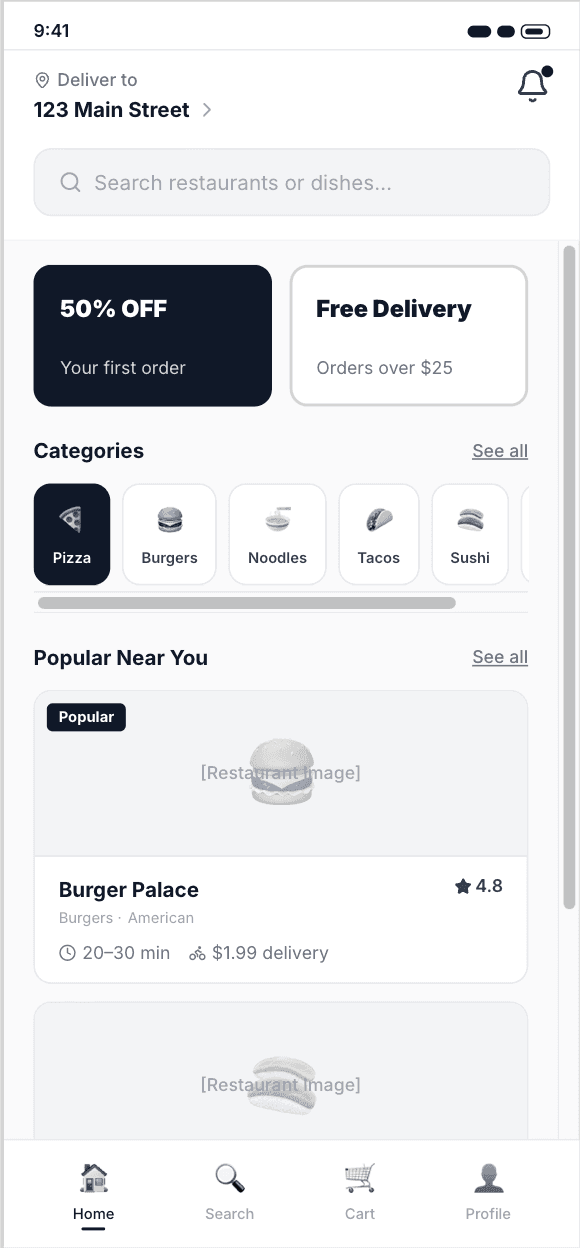
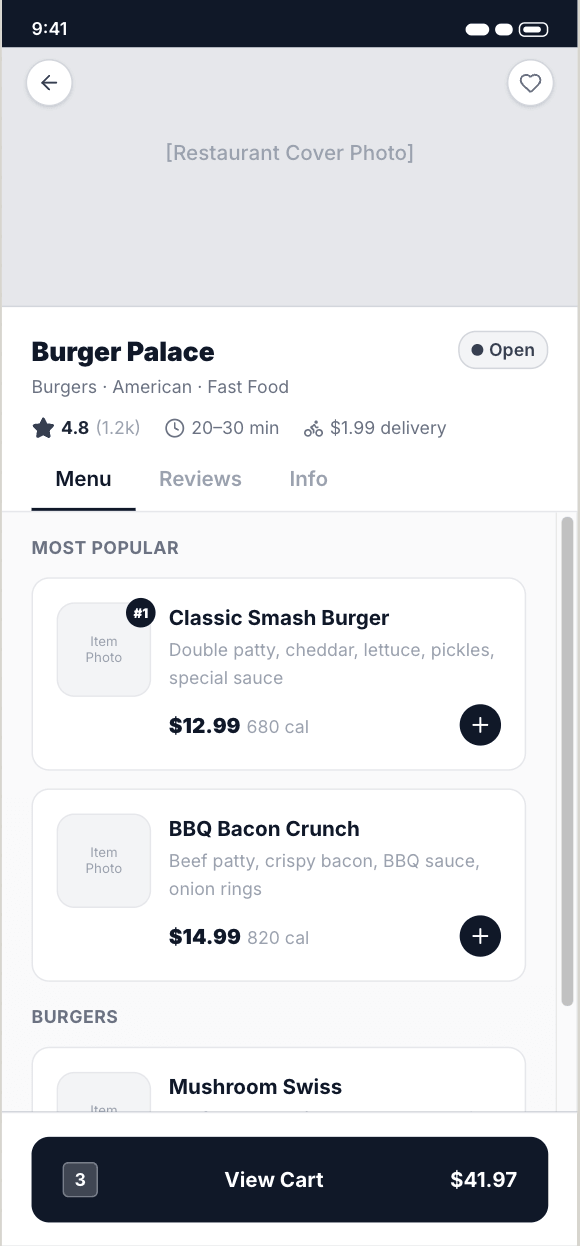
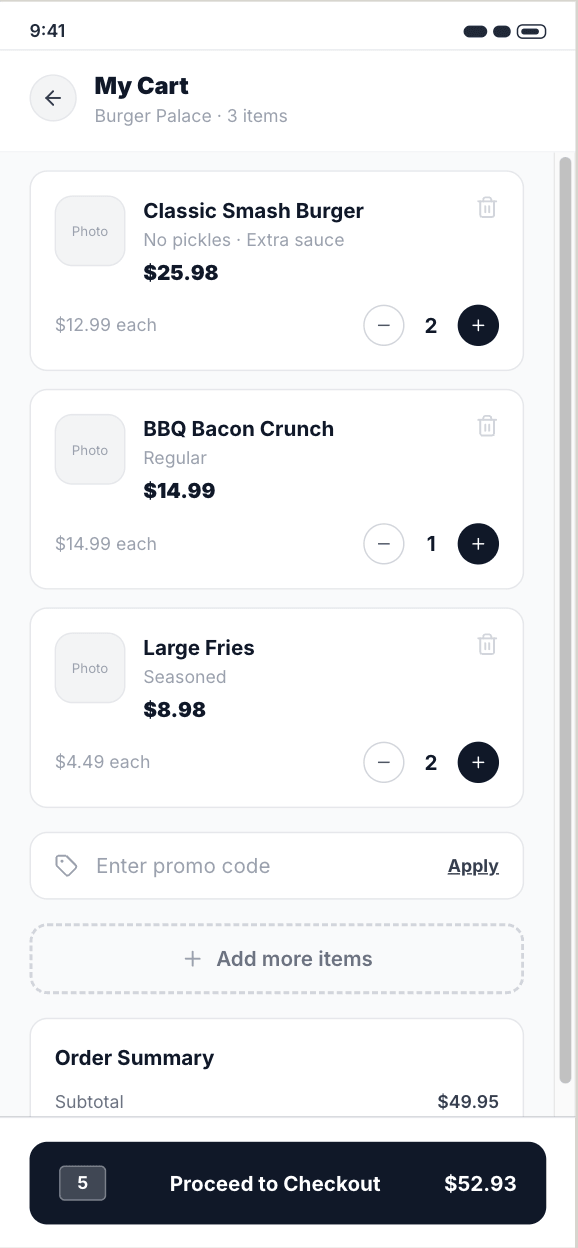
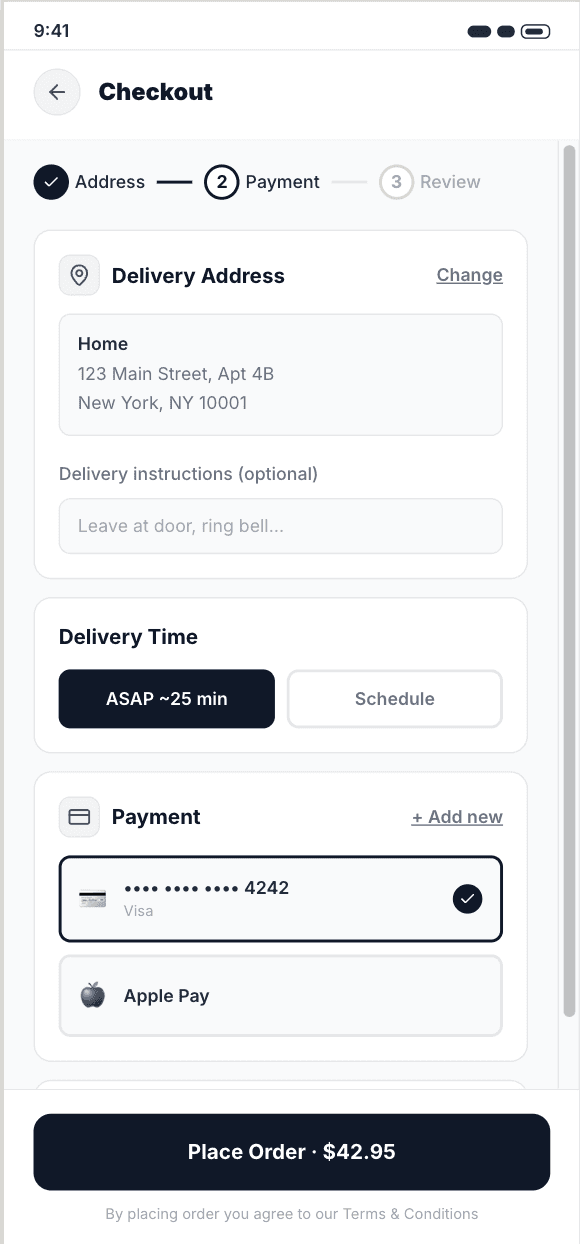
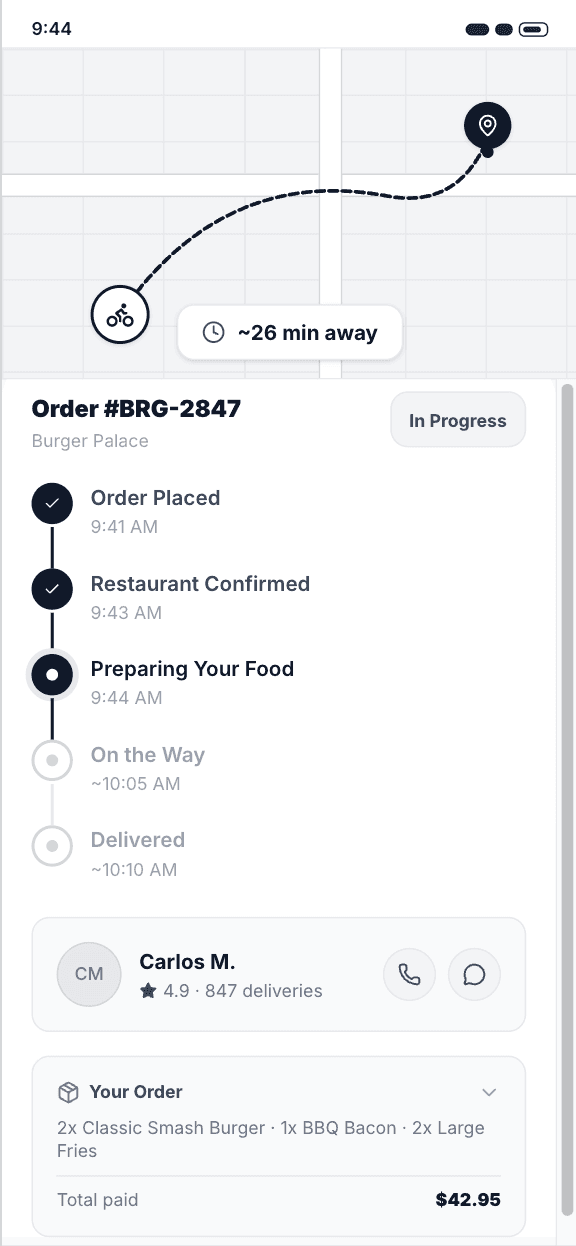
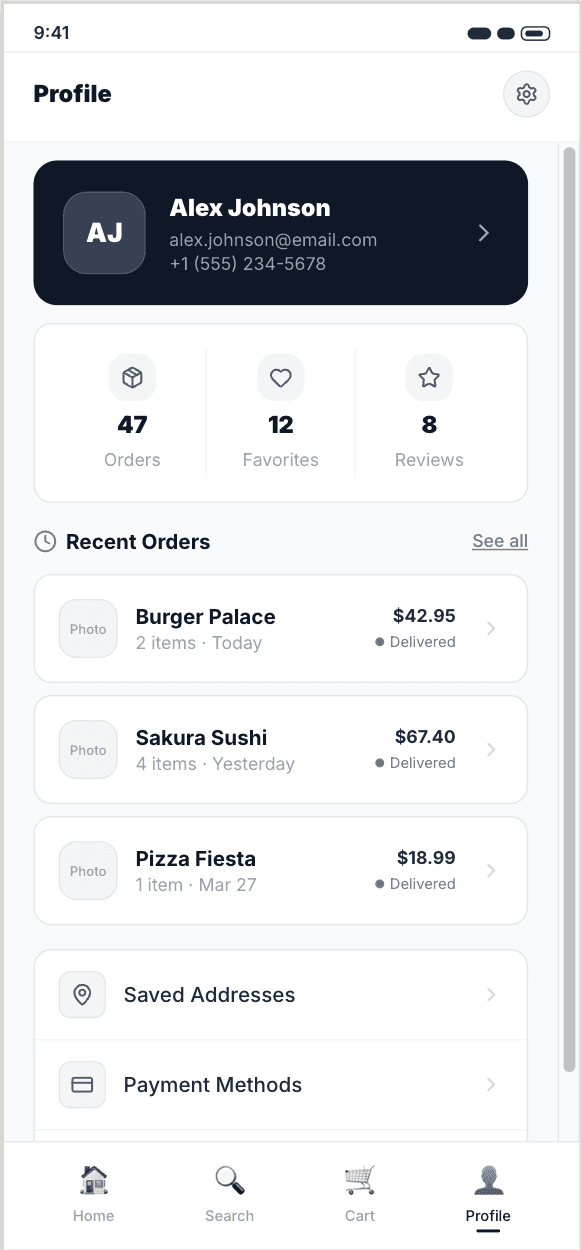
The final wireframes achieved an 88% task completion rate, compared to 51% on the original app.
Visual Design
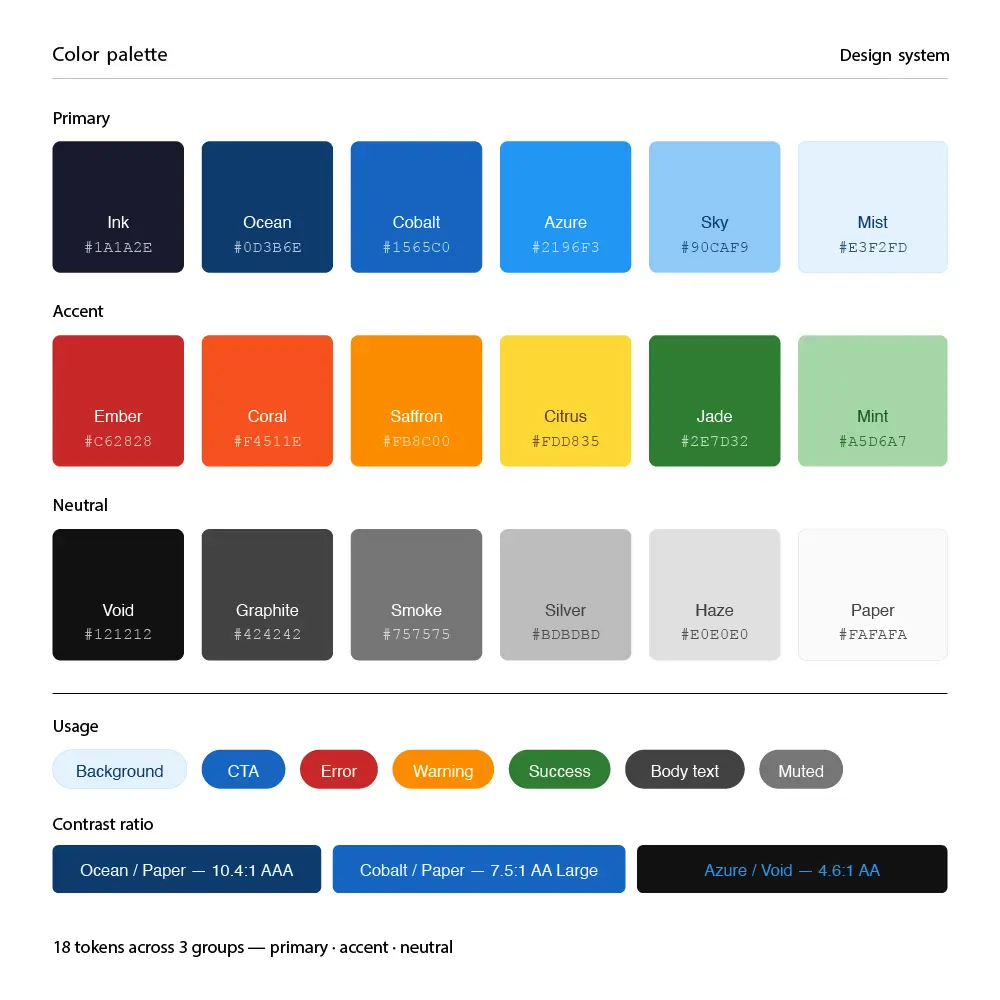
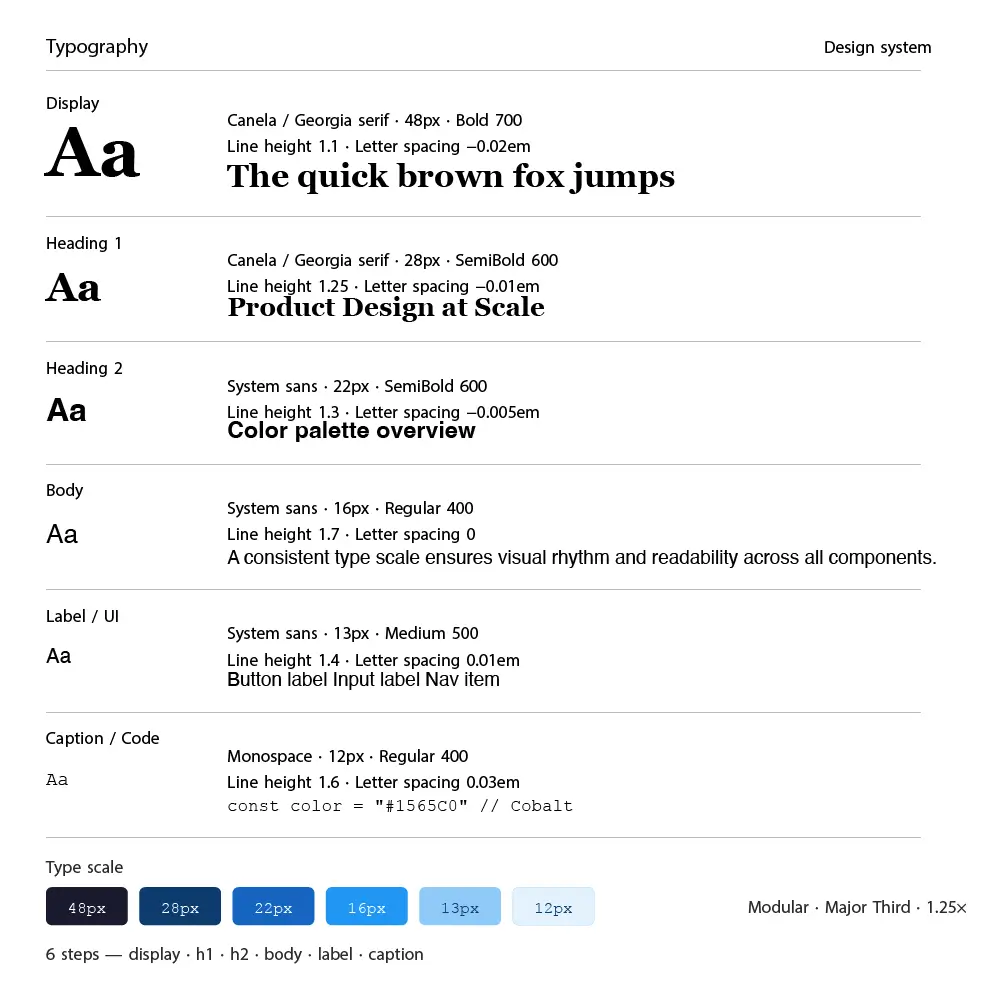
The visual direction needed to feel energetic and appetizing while remaining fast and functional. I developed a warm, high-contrast design system using a saffron and charcoal palette with rounded components to keep the tone friendly and approachable.
Prototyping & Testing
I built a high-fidelity prototype in Figma and ran 4 rounds of moderated and unmoderated testing with 28 participants using Useberry for remote sessions.
28 Test Participants 4 Testing Rounds 91% Task Success Rate
"Ordering feels so much faster now. I didn't have to think at all - it just guided me through."
Iterations & Refinements
Iteration 1: Collapsed the 4-step customization flow into a single bottom sheet. Result: 28% reduction in time-on-screen during item selection.
Iteration 2: Added a persistent "Reorder" shortcut on the home screen for returning users. Result: 40% increase in repeat order rate during beta testing.
Final Design
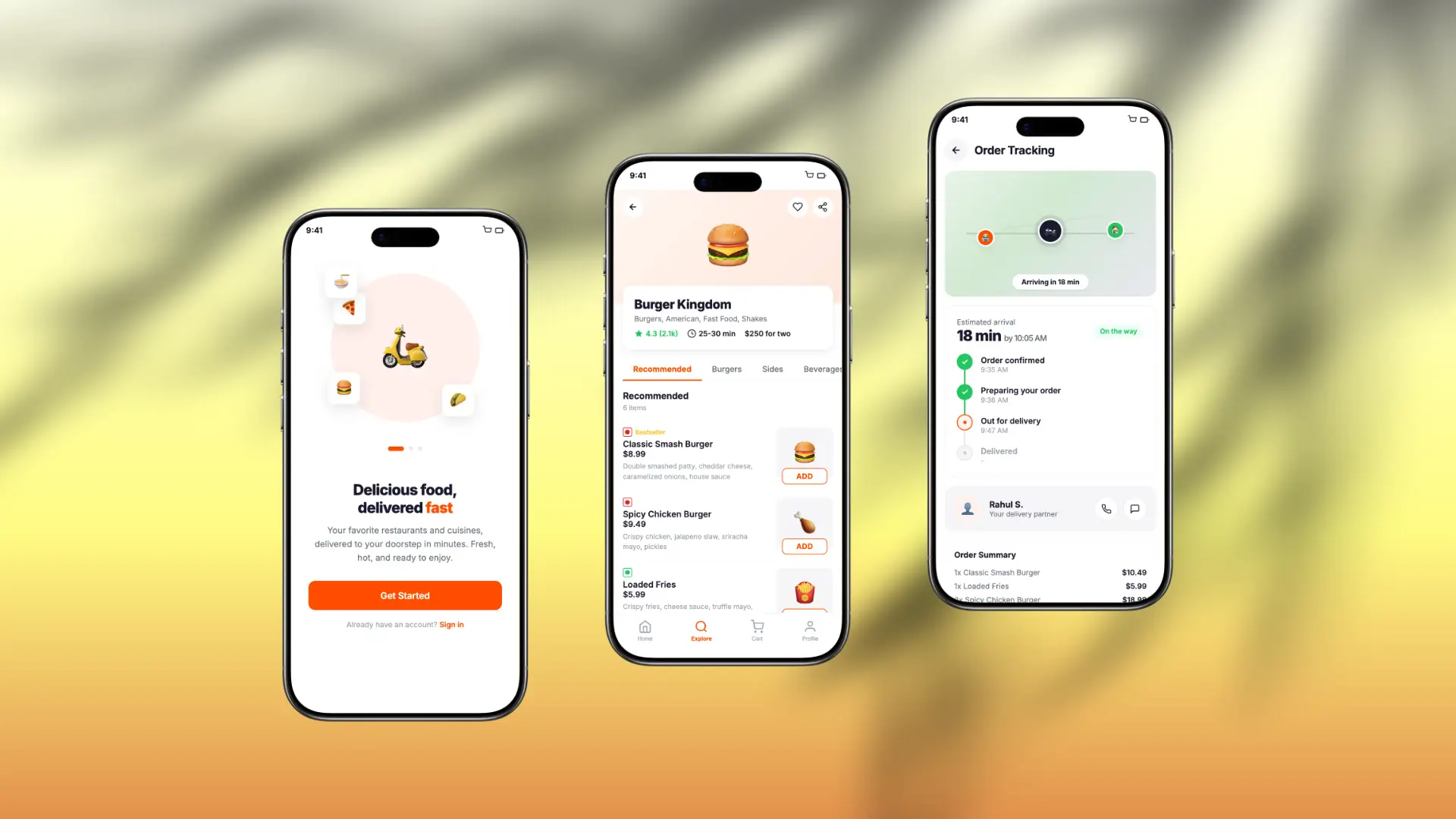
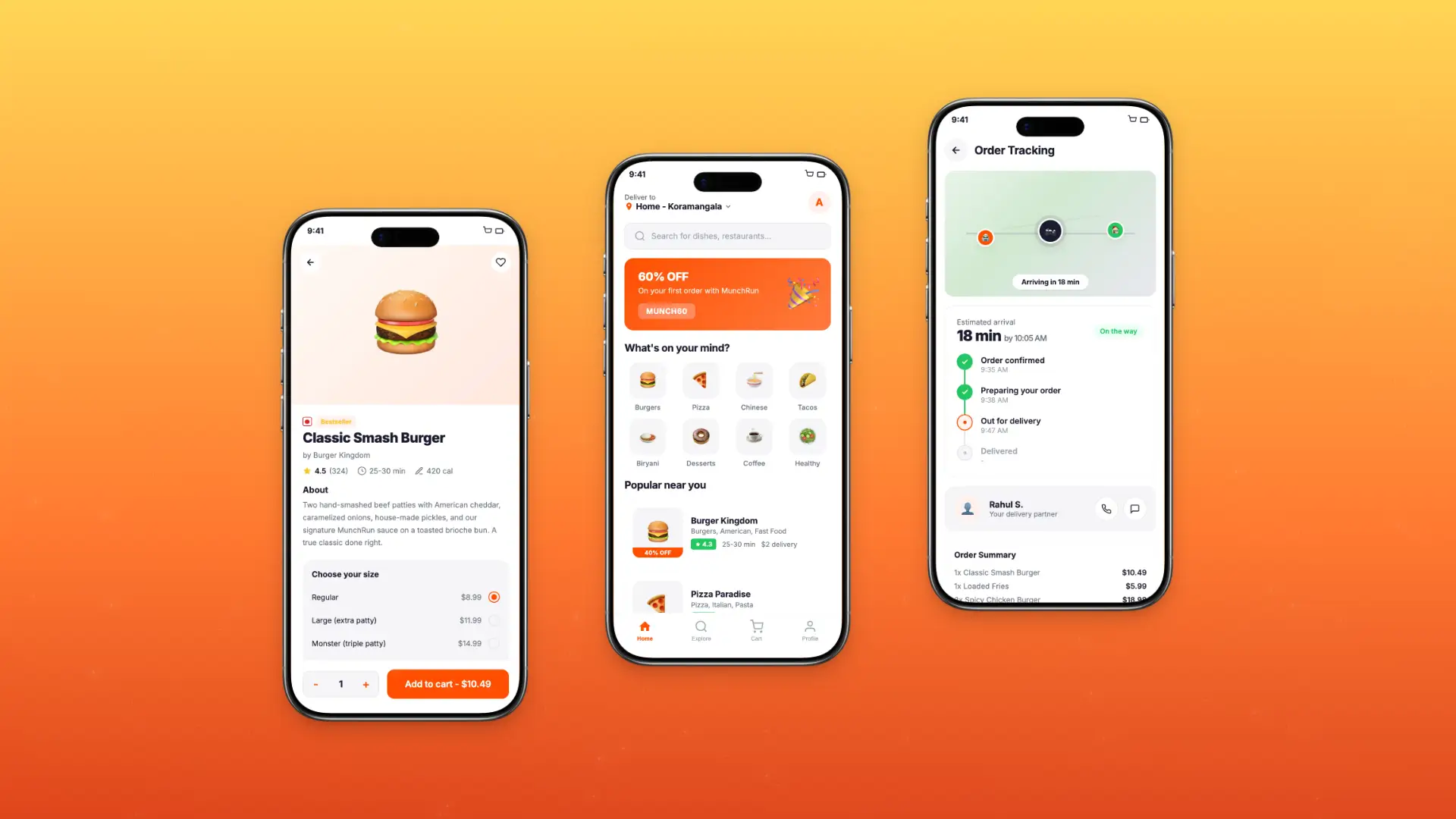
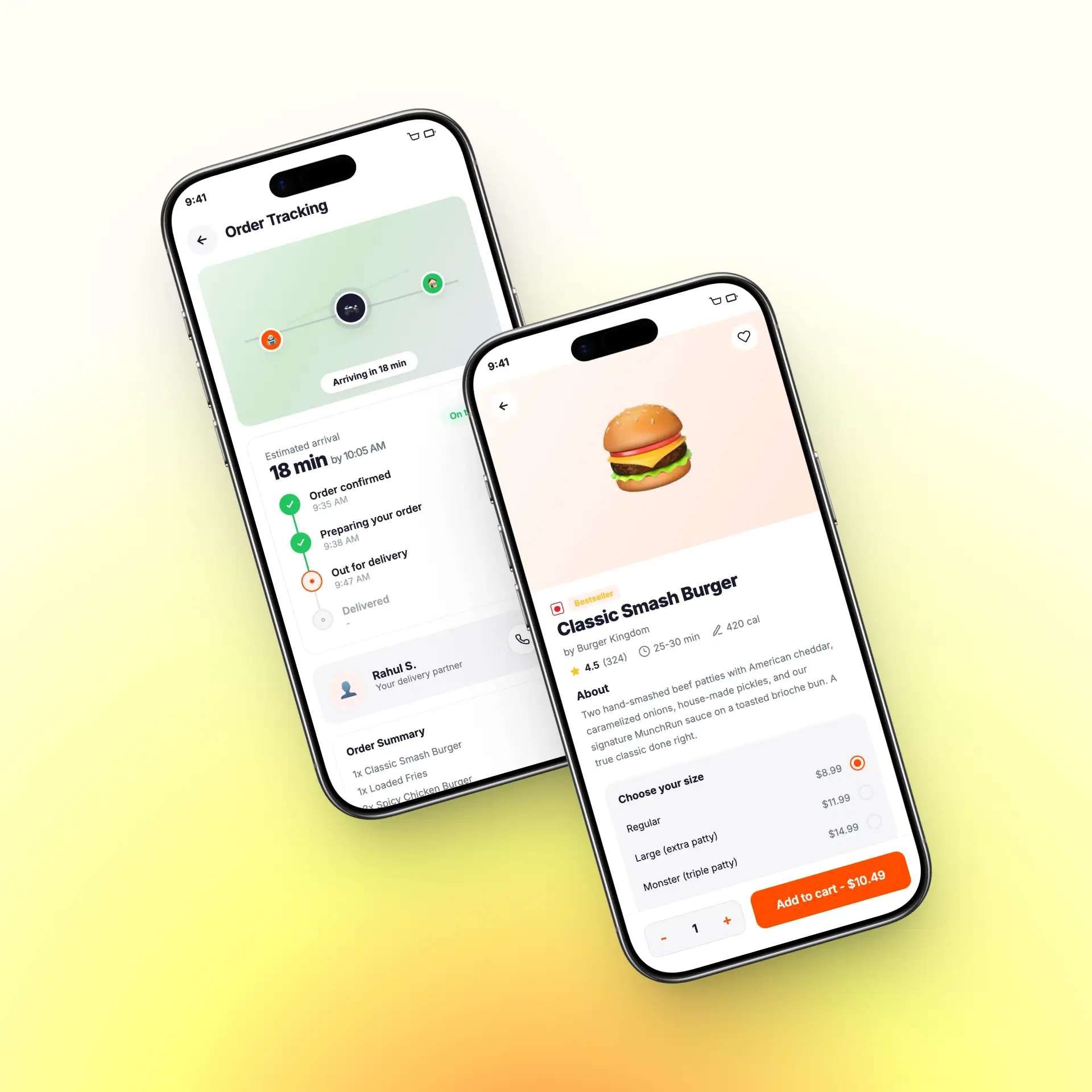
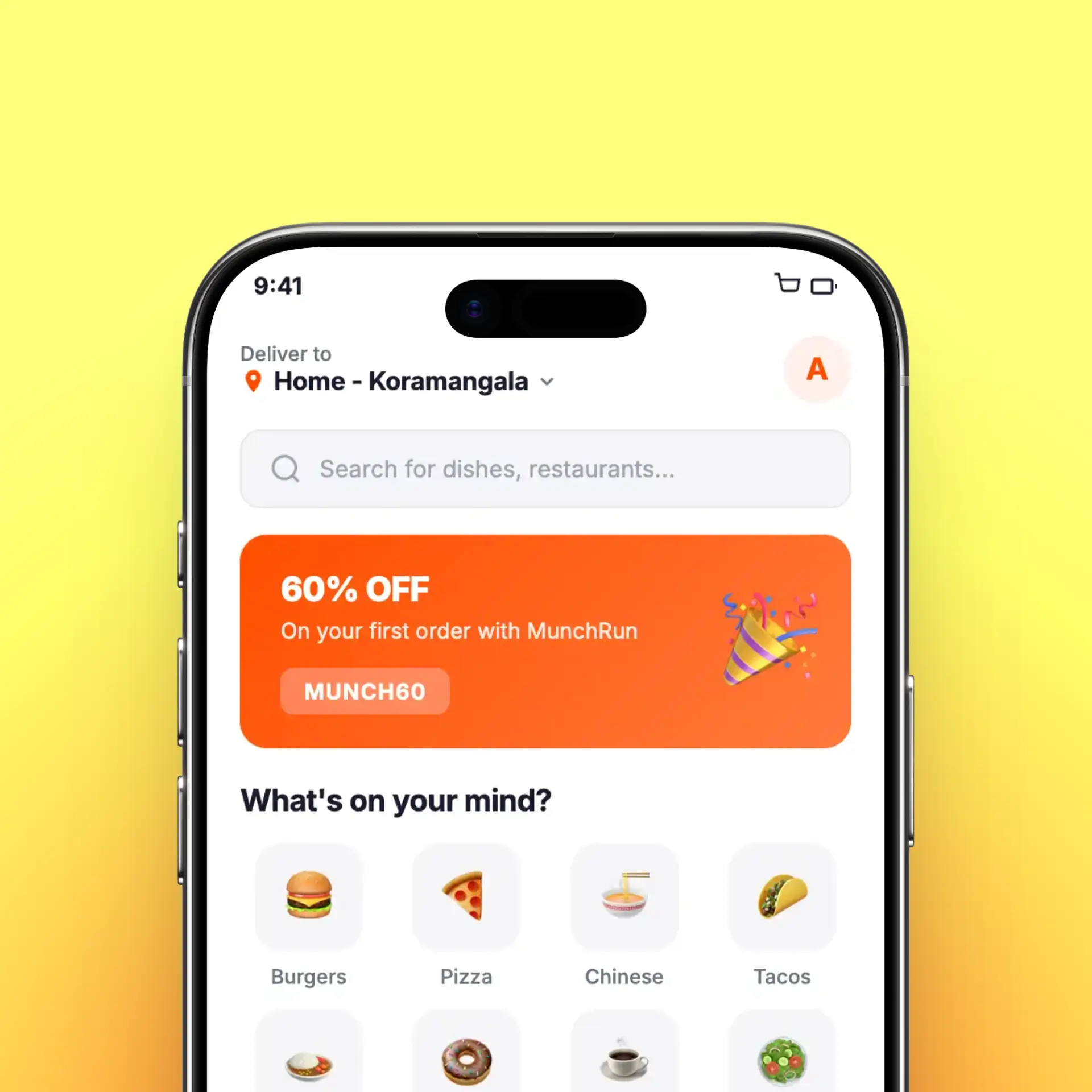
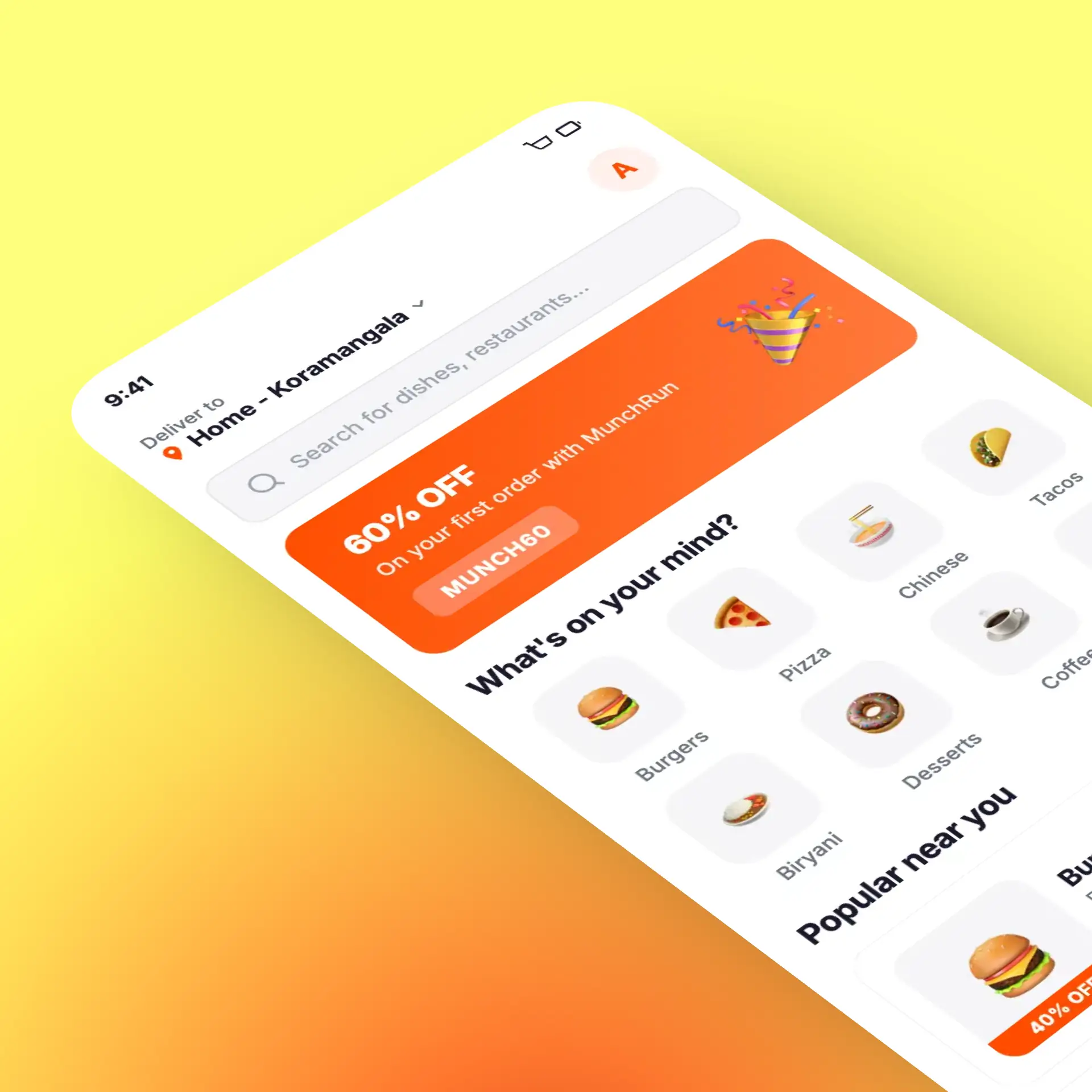
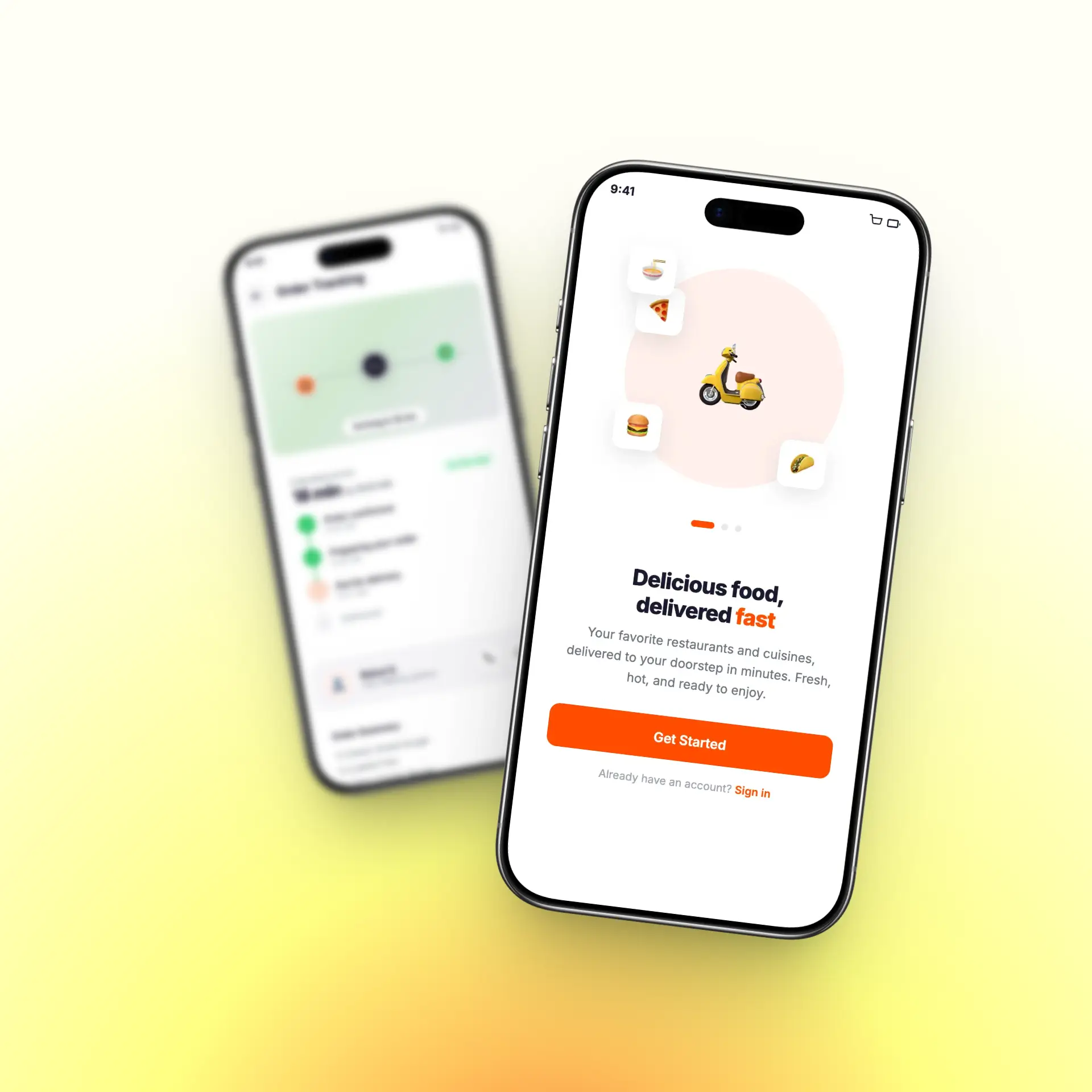
The final design, "QuickFlow," delivers a fast, frictionless ordering experience with a strong visual identity. Key features include:
- One-tap reorder with saved preferences and last delivery address
- Smart restaurant discovery with real-time wait time indicators
- Single-screen item customization with inline add-ons
- Live order tracking with animated map and delivery updates
- Personalized home feed based on order history and time of day
- Full accessibility compliance with WCAG AA contrast and touch target standards
Impact
54%
Reduction in cart abandonment
4.6
App Rating
40%
Increased Order
This update completely changed how I use the app. I placed my usual order in under 2 minutes.
Lessons Learned
In food apps, speed and confidence matter more than visual richness
- Reorder flows are underinvested in most delivery apps despite being the highest-frequency use case
- Motion and micro-interactions significantly improve perceived performance
- Testing with real restaurant menus (not dummy content) exposed critical edge cases early
Next Steps
Introduce AI-powered meal suggestions based on time of day and past orders
- Build a group ordering feature for office and social use cases
- Expand the design system into a shared component library with the engineering team
- Run a 90-day retention study to measure long-term behavioral impact
Recent Case Studies
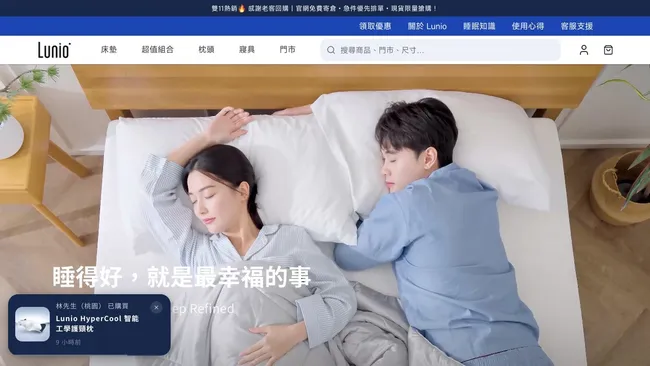
Lunio Taiwan – E-Commerce Sleep Platform (lunio.com.tw)
End-to-end UX/UI design in Figma and web platform development with WordPress and Next.js in collaboration with the dev team for Lunio's flagship Taiwan mattress e-commerce store.
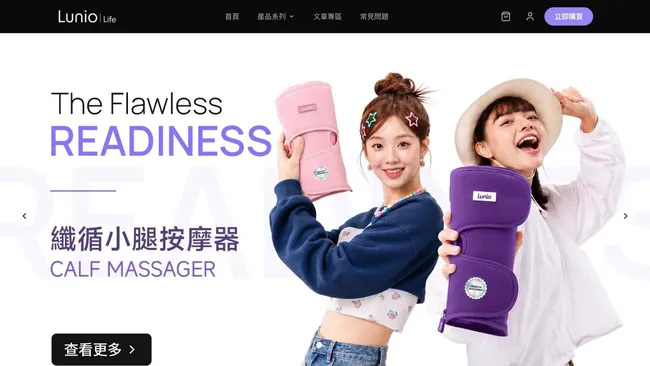
Lunio Life Taiwan – Home SPA E-Commerce Platform (luniolife.com.tw)
UX/UI design system in Figma and full-stack e-commerce web development using WordPress and Next.js with the engineering team for Lunio Life's home SPA massager brand in Taiwan.